
Are you worried your expensive essential oils are losing their potency right on the shelf? Light exposure is a silent killer of your oils’ power. The right bottle color changes everything.
Amber glass is significantly better than clear glass for storing essential oils. Light, especially UV light, causes the chemical components in essential oils to degrade, making them less effective faster. Amber glass effectively filters out most of this damaging light, protecting the oil’s integrity and extending its shelf life compared to clear glass.
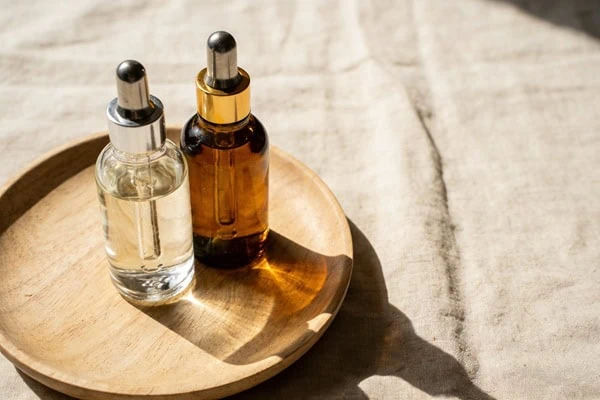
As someone who has spent years in the glass bottle industry, first as a factory worker and now running WXglass, I have seen firsthand how much the container matters. I can tell you right now that choosing the wrong bottle is one of the quickest ways to waste your investment in quality oils. I want to dive into exactly why this seemingly small choice has such a massive impact, so you can stop losing money and start preserving your oils correctly.
Is amber glass better than clear glass for essential oils?
You see both clear and amber bottles everywhere, but which one actually works? Picking the wrong bottle means your oils go rancid fast. Let’s look at the science behind amber glass protection.
Yes, amber glass is better than clear glass for essential oils because it provides superior light filtration. Essential oil compounds are photolabile, meaning they break down when exposed to light, especially the high-energy UV spectrum. Amber glass acts as a natural sunblock for your oils, helping to maintain their molecular structure and therapeutic efficacy for a longer time.
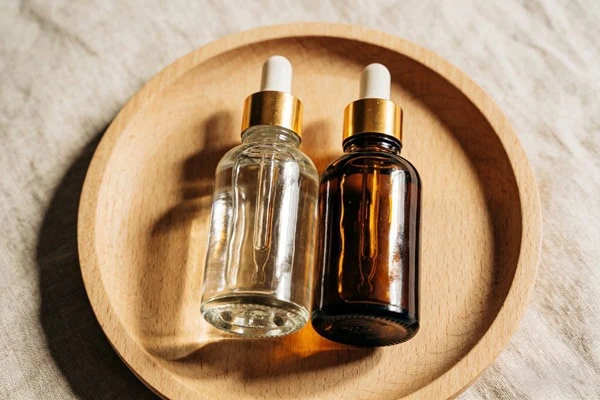
I remember early in my career at the glass factory, watching batches of clear bottles head out the door for oils, and thinking, “Those poor customers don’t know the risk.” The main difference between clear and amber glass comes down to one thing: light protection. Clear glass offers almost none. It allows full spectrum light to pass through. This light accelerates oxidation and degradation in your oils. I think of it as leaving food out in the sun; it spoils faster. Amber glass uses iron oxides in the glass composition to absorb and block UV and blue light. This is key for oil preservation.
How Different Glass Colors Protect Essential Oils
| Glass Color | Light Transmission | Primary Protection Benefit | Best Use Case |
|---|---|---|---|
| Clear | High (Passes all light) | Minimal; good for visual display only. | Water, products used quickly. |
| Amber | Low (Blocks UV and Blue Light) | Maximum light protection, reduces degradation. | Essential oils, light-sensitive serums. |
| Cobalt Blue | Medium (Blocks some light, but less than amber) | Good for preserving some compounds; aesthetically pleasing. | Fragrances, non-oil cosmetic liquids. |
| Green | Medium (Varies, less effective than blue or amber) | Moderate protection; natural products look good. | Herbal extracts, less sensitive ingredients. |
The chart makes it clear: amber is the workhorse for essential oils. When a brand chooses clear glass for oils, it’s usually about product visibility or lower cost, not oil quality. My mission at WXglass is always to elevate product value, and that means pushing for the best protection. You are buying oils for their benefits. The bottle must protect those benefits. The difference in cost between clear and amber is small, but the difference in oil shelf life is huge. I believe you should never compromise the quality of the content for the look of the container. I always advise my clients to put quality first, and for oils, that means amber.
What color bottle is best for essential oils?
With so many colors on the market, how do you decide the best one for your oils? Choosing based on looks, not function, is a big mistake. The answer is simple and scientifically proven for maximum oil safety.
Amber is the best color bottle for essential oils, offering the most comprehensive protection against light-induced degradation. It is widely recognized in the aromatherapy and pharmaceutical industries for its superior ability to block harmful ultraviolet (UV) radiation, which is the primary cause of essential oil potency loss.
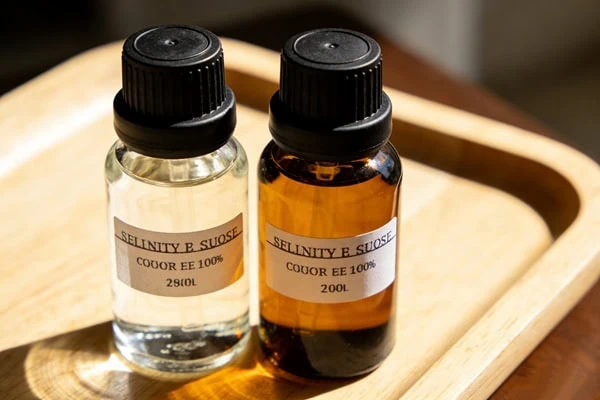
The question of the “best” color always comes up. Based on my years in this business, dealing with sourcing and manufacturing glass, I can confidently say amber glass is the industry standard for a reason. It is not just a preference; it is scientific necessity. I have seen many small companies try to stand out with colors like cobalt blue or dark green. While these colors look nice, and they do offer some protection, they do not match amber’s UV filtering efficiency. I was once helping a client who insisted on using a stunning sapphire blue bottle for their citrus oils. Citrus oils, like lemon and bergamot, are particularly light-sensitive and prone to oxidation. I showed them data: amber glass blocks about 99% of UV light up to a certain wavelength, while that beautiful blue bottle was letting in a noticeable amount more, especially in the crucial 320-400 nm range.
Essential Oil Sensitivity and Bottle Color Needs
| Essential Oil Category | Sensitivity to Light | Recommended Bottle Color | Why Amber is Crucial |
|---|---|---|---|
| Citrus Oils (Lemon, Bergamot) | Very High | Amber | Prevents rapid oxidation and loss of top notes. |
| Coniferous Oils (Pine, Fir) | Moderate | Amber or Dark Green | Minimizes breakdown of terpenes and esters. |
| Mints (Peppermint, Spearmint) | Moderate to Low | Amber, Cobalt Blue | Protects menthol content and reduces light-driven degradation. |
| Floral Oils (Rose, Lavender) | Moderate | Amber | Helps preserve delicate floral aromas and compounds. |
I believe my job at WXglass is to be an expert partner, not just a supplier. I will always advise my clients on the best choice for the product inside the bottle. If you are selling a premium product, the packaging must support that value. Choosing amber is a simple, cost-effective way to show your customers that you care about their oil’s quality from day one to the last drop. If the color is important for your brand, a darker amber is even better than a lighter one. The bottom line is that any color other than amber is a compromise on preservation. I would rather see a brand choose a slightly less attractive but functionally superior bottle.
Why should you not use clear bottles to store essential oils?
You might think clear bottles let you see the oil, which is nice. This convenience is actually destroying the oil you paid for. You need to understand the serious harm light does to your essential oil investment.
You should not use clear bottles to store essential oils because they allow all light wavelengths to pass through, including damaging UV radiation. This high light exposure rapidly degrades the oil’s delicate chemical compounds, leading to a loss of aroma, therapeutic efficacy, and a much shorter shelf life, often causing the oil to go rancid sooner.
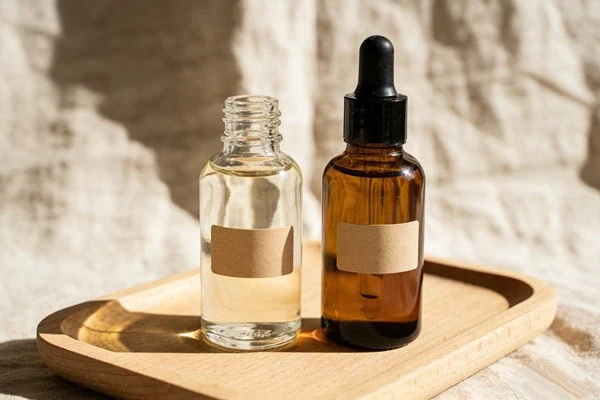
From a manufacturing standpoint, clear glass is often the cheapest and easiest to produce. This is why many non-specialty products use it. However, when I look at a clear bottle of essential oil, I see risk. The primary reason clear bottles are dangerous for essential oils is a process called photodegradation. Essential oils are complex mixtures of hundreds of chemical compounds. Many of these, such as limonene in citrus oils, are highly susceptible to breakdown when exposed to light energy. When light hits these molecules, it causes a chemical reaction. The oil changes composition. This is not a slow, gentle change; it is a fast degradation that can ruin an expensive oil in a matter of months, even weeks, if the oil sits in direct sunlight.
The Chemical Consequences of Clear Bottles
| Light Exposure Factor | Effect on Essential Oils | Practical Result for the User |
|---|---|---|
| UV Radiation | Accelerates oxidation of terpenes and esters. | Oil smells different (often ‘off’ or ‘rancid’). |
| Visible Light | Generates free radicals, breaking down molecular bonds. | Reduced therapeutic benefit (less potent). |
| Heat Absorption | Oil temperature increases, speeding up evaporation and degradation. | Oil level drops faster; potency declines rapidly. |
I remember speaking with a small-batch distiller early in my career, and he swore by clear glass because he thought it looked “pure.” After tracking the stability of his oils in both clear and amber bottles over six months, he was shocked. The oils in the clear bottles showed a significant change in their gas chromatography (GC) profile, indicating major chemical alterations. The oils in the amber bottles remained almost identical to the fresh sample. My personal takeaway from this is simple: essential oils are medicine and luxury in one; you must protect that value. Clear glass is fine for water, but it is a poor choice for preserving complex organic chemistry. Every time I see a brand use clear bottles for their main essential oil line, I know they are prioritizing aesthetics or cost savings over their product’s integrity, and that is not the WXglass way.
What are the disadvantages of amber glass?
Amber glass sounds perfect for essential oils, but is there any downside to using it? No bottle is 100% perfect for every single application. The drawbacks of amber glass are minor, but you still need to know them.
The main disadvantage of amber glass is that the dark color makes it impossible to visually inspect the oil volume and clarity without holding it up to a strong light. Additionally, amber glass is slightly more expensive to manufacture than clear glass due to the additives required for the UV protection, though the cost difference is usually minimal for the end-user.
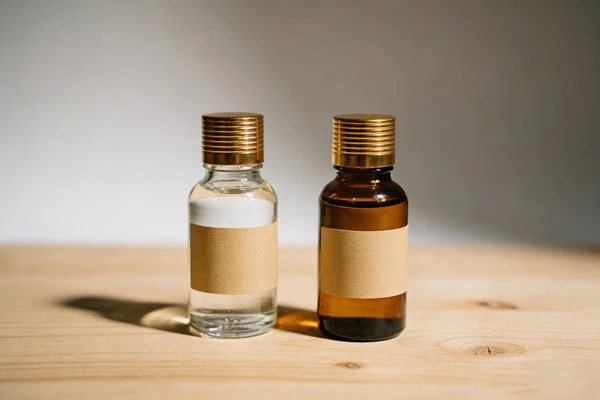
I always try to provide an honest view on every type of packaging at WXglass. While I strongly advocate for amber glass for essential oils, it is not without its minor drawbacks. The biggest one, and one that customers often point out, is the lack of visibility. You cannot easily see how much oil you have left. You usually have to hold the bottle up to a bright light or unscrew the dropper to check. This is an inconvenience, but I tell clients that this small hassle is the cost of superior preservation. I think of it as a trade-off: visibility versus viability. I would rather have a viable, potent oil that I have to work a little harder to see than a clearly visible, but ruined, oil.
Comparing Amber Glass Drawbacks and Benefits
| Factor | Disadvantage of Amber Glass | Advantage of Amber Glass | The Better Choice for Oils |
|---|---|---|---|
| Cost | Marginally higher manufacturing cost than clear. | Protects the far more expensive essential oil content from degrading. | Advantage (Protects the investment). |
| Aesthetics | Cannot see the oil’s color or clarity easily. | Gives a classic, professional, and pharmaceutical look. | Advantage (Prioritizes function). |
| Visual Check | Need strong light to check the remaining volume. | Eliminates the single biggest threat to oil longevity: light. | Advantage (Prioritizes longevity). |
Another tiny factor I have seen is that the amber color, especially a very dark shade, can sometimes make labels and print colors look slightly different than they would on a clear background. This is a purely cosmetic issue that good graphic design can easily fix. My takeaway is that the disadvantages of amber glass are purely logistical and aesthetic. They are small problems that have zero impact on the function of the bottle, which is to protect the oil. Compared to the chemical disaster of storing essential oils in clear glass, the drawbacks of amber glass are negligible. When choosing bottles, you should focus on risk mitigation. Amber glass mitigates the biggest risk factor for essential oils: light.
Conclusion
The best choice for essential oils is amber glass because it blocks damaging UV light, protecting oil potency and extending shelf life, while clear glass offers no necessary protection.