
A reed diffuser brand can lose customer trust when its bottles, refills, and accessories look unrelated. I build a consistent packaging range to help brands create a clear identity and encourage repeat purchases.
I build a consistent reed diffuser packaging range by using matching bottle shapes, colors, materials, closures, and labels across the main product and refill products. I also match bottle capacities to fragrance volumes, test refill compatibility, and choose materials that protect the fragrance and support the brand’s price positioning.
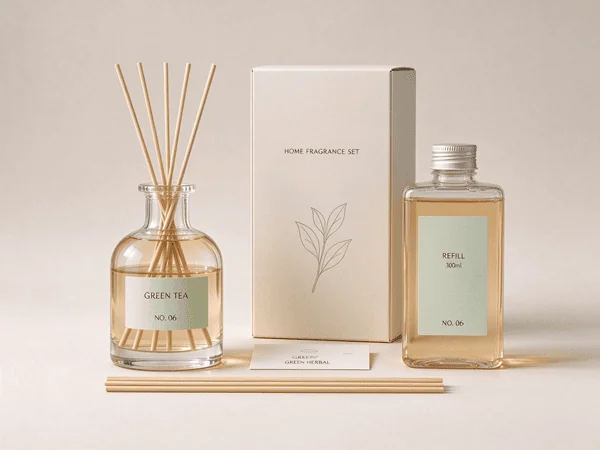
I see packaging as more than a container for fragrance. It is part of the product experience, from the first purchase to the next refill. A well-planned range helps customers recognize the brand, understand each product, and buy refills without replacing the whole diffuser. I focus on four areas when I develop a packaging range: visual consistency, practical refill design, fragrance compatibility, and product performance. These choices help brands build a range that looks professional and works well in daily use.
Can You Make Reed Diffuser Refills?
I often see fragrance brands focus on their first diffuser bottle and leave refill packaging until later. This can limit repeat sales and make the product range look incomplete.
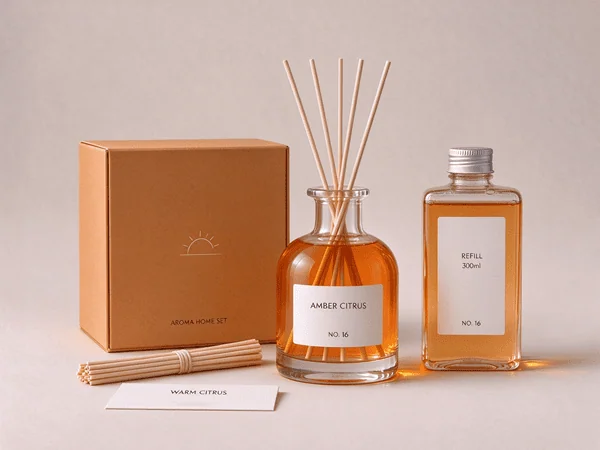
Yes, I can develop packaging for reed diffuser refills as a separate product within the same range. I recommend matching the refill bottle or container to the original diffuser through consistent colors, labels, and brand details. I also check the opening, filling method, capacity, and compatibility with the fragrance formula.
How I Plan a Refill Packaging System
I start by defining the relationship between the original diffuser and the refill product. The original diffuser usually needs an attractive bottle that customers want to display at home. The refill needs packaging that makes pouring simple, reduces spills, and keeps the fragrance protected during storage.
I consider three main packaging options:
- Matching glass refill bottles: I use the same glass style or a related design to maintain a premium appearance. This option works well for brands that want their refill products to remain visually consistent with the original collection.
- Functional refill bottles: I choose a simpler bottle with a practical opening and a suitable closure. This can reduce unnecessary decoration while keeping the refill easy to identify.
- Larger refill containers: I consider larger capacities for customers who want to refill several diffusers or purchase fragrance for regular use. I confirm that the container remains easy to handle and pour.
I also plan the capacity relationship between the original diffuser and its refill. For example, a brand could sell a 100 ml diffuser with a 200 ml refill. The larger refill gives customers enough fragrance for more than one filling, depending on the original bottle capacity and the amount of fragrance used.
I pay close attention to the bottle opening and closure. A narrow opening may help control pouring, while a secure closure helps reduce leakage during transportation. I test the complete packaging system with the actual fragrance formula before approving mass production.
How I Keep Original and Refill Products Consistent
I do not make every bottle identical just to create consistency. I use a common design language across the range.
| Packaging element | Original diffuser | Refill product |
|---|---|---|
| Bottle shape | Decorative and suitable for display | Matching or related shape |
| Main color | Brand color | Same color family |
| Label design | Brand, scent, and product details | Same identity with refill details |
| Closure | Decorative cap with a suitable inner seal | Functional, secure pouring closure |
| Capacity | Designed for regular home use | Sized for one or more refills |
| Packaging message | Ready-to-use diffuser | Refill for the matching collection |
I also make the refill label easy to understand. I use clear wording such as “Reed Diffuser Refill” and include the fragrance name and volume. This helps customers select the correct product without confusion.
When I plan a new collection, I establish these rules before I finalize the individual bottles. This makes future product development easier. The brand can introduce new fragrances or refill sizes without changing its visual identity.
Are Reed Diffusers OK for Lungs?
I know that home fragrance customers want a pleasant scent, but they also want to feel comfortable using it at home. A brand should not treat fragrance safety as a minor packaging detail.
Reed diffusers release fragrance compounds into indoor air, and some people may experience irritation or sensitivity to these ingredients. I recommend following the fragrance supplier’s safety guidance, using the product as directed, maintaining suitable ventilation, and avoiding unsupported claims that a diffuser is completely safe for everyone.
How I Consider Fragrance Safety in Packaging Design
I treat the fragrance formula and the packaging as two connected parts of the product. A bottle does not make a fragrance safe simply because it is made from glass. The formula, the amount released into the air, the room conditions, and the user’s sensitivity all matter.
Some fragrance ingredients can cause irritation or allergic reactions in sensitive people. Strong fragrance exposure may also trigger symptoms in people with asthma or other respiratory sensitivities. I therefore avoid marketing language that promises a reed diffuser will improve breathing, purify indoor air, or remain harmless under every condition.
I also consider how the bottle design affects normal use. A stable base can reduce accidental tipping. A suitable neck and closure can help control leakage during storage and transport. Clear product instructions can help customers understand how to use and store the fragrance.
I recommend that fragrance brands obtain the relevant safety documentation from their fragrance suppliers. They should review the applicable classification, labeling, and regulatory requirements for each target market. They should also provide practical instructions about ventilation, placement, and keeping the product away from children and pets.
How I Choose Packaging for a Responsible Product Range
I use the following points when reviewing a diffuser packaging proposal:
- Stable bottle design: I prefer a base that suits the bottle’s height and expected use.
- Suitable closure: I check that the closure helps prevent leakage before the product reaches the customer.
- Clear instructions: I leave enough label space for the required safety information and directions.
- Appropriate material: I confirm that the selected bottle, closure, liner, and other contact materials are compatible with the actual fragrance.
- Responsible marketing: I avoid making medical or health claims without appropriate evidence.
Glass can be a useful packaging material because it is rigid and can support a premium product appearance. It is also recyclable in many markets where suitable collection and processing systems exist. However, I do not assume that every glass bottle is automatically suitable for every fragrance formula.
For B2B buyers, I recommend reviewing the entire product system before launch. The packaging supplier should confirm the bottle specifications, while the fragrance manufacturer should provide the formula-related information needed for compatibility testing. Both sides need to work together to reduce avoidable product problems.
What Is the Best Carrier Oil to Use in a Reed Diffuser?
I know that a good-looking bottle cannot compensate for a fragrance that performs poorly. If a diffuser releases too little scent or evaporates too quickly, customers may not buy the same product again.
There is no single best carrier oil for every reed diffuser. I recommend selecting a carrier system based on fragrance compatibility, evaporation rate, viscosity, reed performance, safety requirements, and the intended scent strength. I test the complete formula with the chosen reeds and bottle before finalizing the packaging.
How I Compare Common Diffuser Carrier Systems
I do not select a carrier only because it is popular or inexpensive. I consider how it performs with the fragrance concentrate, reed material, and bottle opening.
Common options include purpose-made diffuser bases, certain low-viscosity solvents, and other carrier systems formulated for home fragrance. Some brands may use ingredients such as Augeo-based diffuser bases or suitable glycol ethers, depending on the product formulation and local regulations. These materials are not interchangeable, and each one needs to be assessed for its intended use.
| Factor | What I check | Why it matters |
|---|---|---|
| Viscosity | Whether the liquid moves through the reeds effectively | It affects fragrance release |
| Evaporation | How quickly the carrier and fragrance evaporate | It affects product lifespan |
| Fragrance compatibility | Whether the ingredients remain stable together | It helps maintain product quality |
| Reed performance | Whether the selected reeds absorb and release the formula | It affects scent diffusion |
| Safety documentation | Whether the supplier provides suitable technical and safety information | It supports responsible product development |
| Packaging compatibility | Whether the formula affects the bottle closure, liner, or other components | It helps prevent leakage or material damage |
I avoid recommending a carrier oil without knowing the fragrance formula. A carrier that works well with one fragrance may perform differently with another. I also avoid assuming that a thicker liquid will always last longer or that a thinner liquid will always produce a stronger scent. Actual performance depends on several factors.
How I Test the Formula Before Mass Production
I test the formula with the intended reeds and the final bottle design. I observe how quickly the liquid travels through the reeds, how the scent develops, and how much liquid evaporates over time.
I also check whether the formula changes the appearance of the bottle, label, or closure. Some fragrance ingredients may affect printing, coatings, seals, or plastic components. Glass itself is often a good choice for fragrance packaging, but the closure system still requires careful selection.
I record the test conditions, including the fragrance volume, reed quantity, room conditions, and observation period. These details help me compare different designs more fairly.
I also ask the fragrance supplier to confirm the correct handling instructions and recommended formula parameters. I do not change carrier ratios based on guesswork alone. A brand should validate the formula before it orders a large quantity of finished packaging.
For me, the best carrier system is the one that delivers the intended fragrance performance, meets applicable safety requirements, and works reliably with the selected bottle and reeds.
How to Maximize Reed Diffuser Performance?
I see brands lose repeat sales when their diffusers stop releasing fragrance as expected. Customers may blame the fragrance itself when the real problem comes from the formula, reeds, bottle design, or placement.
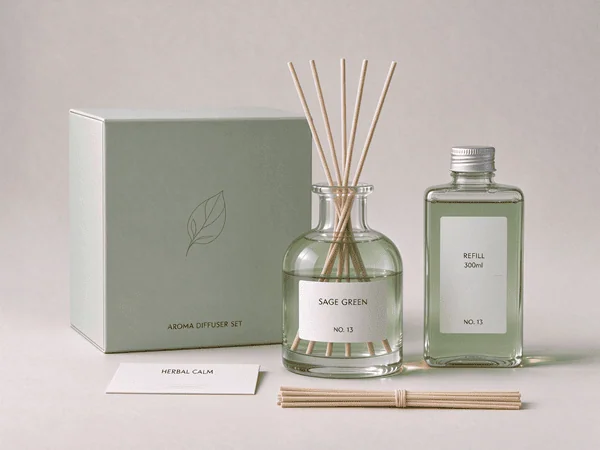
I maximize reed diffuser performance by matching the fragrance formula with suitable reeds and a compatible bottle. I also consider the bottle opening, room conditions, and recommended usage instructions. I test the complete system to find a balance between scent release, product lifespan, and ease of use.
How I Improve Fragrance Release
I start with the reeds because they carry the liquid from the bottle into the surrounding air. Different reed materials and sizes can produce different results. Natural rattan reeds have channels that help move the liquid upward, while fiber reeds may offer more consistent performance with some formulas.
I do not assume that adding more reeds will always improve the result. More reeds can increase the exposed surface area and may lead to faster evaporation. The correct quantity depends on the bottle opening, the formula, the reed dimensions, and the desired scent level.
I also consider the room where customers will use the product. A diffuser in a large, well-ventilated space may perform differently from one in a small room. Air movement, temperature, and humidity can change evaporation and scent distribution.
I use a practical testing plan:
- I select a suitable fragrance formula and reed type.
- I test the intended reed quantity with the chosen bottle.
- I record the initial scent strength and liquid level.
- I observe performance under consistent room conditions.
- I adjust the formula or reed arrangement if the results do not meet the product target.
I recommend turning the reeds only when the product instructions support it. Turning them may temporarily increase scent release, but it can also increase evaporation and expose users to more fragrance. Customers should follow the fragrance brand’s directions rather than turn the reeds on a fixed schedule without considering the formula.
How Bottle Design Affects Diffuser Performance
I consider bottle geometry during product development because the bottle is part of the functional system. The opening, neck, internal capacity, and base all affect how customers handle the product.
| Design feature | Possible effect | My design consideration |
|---|---|---|
| Bottle opening | Affects reed spacing and exposed liquid area | Match it to the reed size and formula |
| Bottle height | Affects visual balance and handling | Keep the bottle stable with reeds inserted |
| Bottle capacity | Affects expected use time and refill frequency | Match capacity to the target market |
| Base width | Affects stability | Reduce the risk of accidental tipping |
| Neck and closure | Affect storage and transport | Check sealing and leakage resistance |
| Glass color | Affects the visual presentation of the liquid | Match the brand identity and product requirements |
I also balance appearance and performance. A narrow opening may limit the exposed liquid surface, but it must still fit the required reeds and support practical use. A wide opening may provide more space for reeds, but the formula’s evaporation rate and the closure design need careful review.
I test the bottle with the real fragrance formula instead of judging the design by appearance alone. I check the bottle’s stability, closure fit, and performance during normal use. For products intended for export, I also consider packaging protection during transport because damaged or leaking products can create costly claims.
How I Build a Better Customer Experience
I want the customer to understand how to use the product without needing extra support. I therefore recommend clear instructions about the number of reeds, placement, ventilation, and safe handling.
I also plan refill packaging as part of the same system. A compatible refill allows customers to reuse the original decorative bottle and purchase fragrance again. This can support repeat business and help brands create a more complete product range.
I do not promise a fixed diffuser lifespan without testing. Actual performance depends on the formula, room conditions, reed type, and bottle design. I prefer to give brands realistic product guidance based on test results.
How Do I Keep a Reed Diffuser and Refill Range Consistent as It Grows?
I find that packaging becomes harder to manage when a brand adds new fragrances, bottle sizes, and refill products without a clear design plan. Small differences can make the collection look unrelated and increase purchasing complexity.
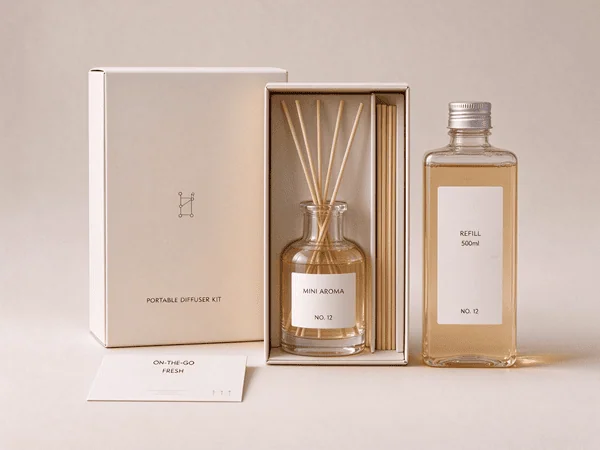
I keep a growing range consistent by creating shared specifications for bottle shapes, colors, finishes, closures, label layouts, and capacities. I also document each approved component and test new products against the existing range. This approach helps brands add products without losing their identity.
How I Create a Packaging Specification
I establish a packaging specification before I approve mass production. It records the important details of each component and gives the brand and supplier a shared reference.
My specification includes:
- Bottle capacity and dimensions.
- Glass color and surface finish.
- Bottle weight and base design.
- Neck dimensions and closure requirements.
- Label size, position, and artwork.
- Fragrance contact and compatibility requirements.
- Packing method and transport protection.
- Approved samples and quality standards.
I also create a simple product matrix. It shows which bottle styles, capacities, closures, and labels belong to each fragrance or refill product. This makes it easier to manage new product requests and reduces the risk of ordering incompatible components.
When I develop a new bottle, I compare it with the approved range. I ask whether the new design supports the brand’s visual identity and whether the product offers a clear reason to exist. I do not add a new bottle style only because it looks different.
How I Balance Customization and Purchasing Efficiency
I understand that B2B buyers need attractive packaging, but they also need to control cost, inventory, and lead time. I therefore separate the elements that must remain consistent from the elements that can change.
| Element | My recommendation |
|---|---|
| Bottle family | Keep a limited group of related shapes |
| Glass color | Use a defined color palette |
| Surface finish | Select approved finishes for the collection |
| Label artwork | Change fragrance information while keeping the main layout |
| Closure | Standardize compatible closures where practical |
| Refill capacity | Offer sizes that match real customer needs |
| Custom features | Add them when they support brand positioning or product function |
I also review the cost of custom molds, decoration, and additional components before making a final decision. A unique bottle may help a premium brand stand out, but it can require extra development time and investment. A standard bottle with a custom finish or label may provide a practical starting point.
I work with buyers to confirm expected order quantities, target markets, and product launch schedules. These details help determine whether a standard design, a customized existing bottle, or a new mold makes the most sense.
I also recommend keeping approved samples and written specifications for repeat orders. This helps the supplier maintain consistency and gives the buyer a clear basis for quality checks. When a brand expands into more fragrances or refill sizes, a well-documented packaging system makes the process easier to manage.
Conclusion
I build consistent reed diffuser and refill ranges by matching design, function, fragrance compatibility, and quality standards. A clear packaging system helps brands create a stronger identity and support repeat purchases.