
You love that rustic, textured look for your candles, but is it safe to coat glass jars in clay or cement? Don’t risk a DIY disaster.
Yes, it is generally safe to use glass candle jars for DIY clay and cement finishes, but only if the glass itself is certified heat-resistant and you prepare the exterior properly for adhesion. The main trick is ensuring the exterior coating does not interfere with the jar’s ability to handle thermal stress.
When I first started in the glass bottle factory, I saw how much care goes into making glass safe for heat. This deep understanding is why I can tell you that not all glass is created equal, especially when you are adding a heavy, non-flexible finish like cement or clay. If you skip a critical step, your beautiful creation could crack under the heat of a burning candle. Let me walk you through exactly what I’ve learned about choosing the right jar and preparing it for a perfect, safe finish.
How to know if a glass is candle safe?
Buying glass jars feels easy, but can you trust them for a hot candle? Choosing the wrong glass is a major fire hazard.
To know if a glass jar is candle safe, you must confirm it is made from tempered or borosilicate glass, or is explicitly marketed as a ‘candle container’ that has passed rigorous thermal shock tests. Look for jars with thicker bases and walls, as these features help manage heat stress better.
This is one of the biggest questions I get, and it is a matter of safety, not just looks. When I worked in the factory, we tested glass all the time. Candle-safe glass must handle something called thermal shock. This means the glass must not crack when the temperature changes fast, like when you light a wick or extinguish the flame. Normal drinking glasses or food jars are often made of soda-lime glass. This type of glass breaks easily under thermal stress. The best candle jars are usually made from glass that has been strengthened through tempering or are made from borosilicate glass, which handles heat much better. When you buy a jar, you should always ask the supplier for their thermal test data or look for specific certification. If you are buying a used jar, look for jars with thick walls and a very heavy base, as this is a good sign of quality glass. The best way to check is to know your supplier. At WXglass, we make sure every candle jar meets strict safety standards. You must be sure the jar can handle the heat before you add a cement finish, because that finish will hold in more heat, making the glass work harder.
| Glass Type | Thermal Shock Resistance | Best Use for Candles | Notes on Safety |
|---|---|---|---|
| Soda-Lime Glass | Poor to Fair | Low-Temperature Use | Avoid for high-heat candles or long burns. |
| Tempered Glass | Good | Standard Candle Jars | Best balance of cost and heat resistance. |
| Borosilicate Glass | Excellent | Specialty, High-Heat | Excellent choice for maximum safety and durability. |
How to tell if a glass jar is heat-resistant?
You have a jar, but how do you know if it can really take the heat? Guessing is a huge mistake that can lead to glass failure.
The most reliable way to tell if a glass jar is heat-resistant is to check for supplier documentation that confirms it passed a thermal shock test, such as the required standard of surviving a 170°F (77°C) temperature change. Visually, heat-resistant jars often have a uniform thickness, minimal bubbles, and a heavy, sturdy base.
In my years in the glass business, I have seen too many people trust a jar just because it looks thick. Thickness is important, but the way the glass is made is what really matters. Heat resistance is not something you can easily test at home without risking a crack. You need to rely on the manufacturer’s word and their data. A good candle jar supplier will have a Certificate of Analysis (COA). This document shows the raw material used and the results of their testing. For DIY projects where you are using an existing glass jar, you need to be very careful. A simple home test you can do is the boiling water test, but it is risky and not a real safety guarantee. You pour hot, not boiling, water into the jar, let it sit for a minute, and then pour it out and immediately pour in cold water. If it cracks, it is not safe. However, this only gives you a basic idea. For a jar you are going to coat with cement or clay, I strongly recommend using only jars purchased directly from a candle container supplier. The cement finish adds a layer that holds heat in, and this can push a marginally safe jar over its breaking point. I always tell my clients, the base of the jar is the most important part because it gets the hottest. Always look for a solid, thick base. The quality of the glass matters more than any DIY coating.
How to seal a concrete candle jar?
You have coated your jar in cement or clay, but how do you protect that finish? A weak seal means your beautiful finish will crumble and look bad fast.
To properly seal a concrete or clay-finished candle jar, you must use a non-flammable, non-toxic, and heat-safe sealant that is specifically formulated for porous mineral surfaces. The most common and effective method is applying at least two coats of a water-based acrylic or penetrating stone/concrete sealer after the finish is completely dry.
This sealing step is vital for the long life of your DIY finish. Cement and clay are very porous materials. This means they will easily absorb moisture, dust, and candle wax. Over time, the finish will stain, weaken, and start to flake off the glass. Sealing is what stops this from happening. When I think about sealing, I focus on two things: durability and safety. For durability, you want a sealant that penetrates the cement and creates a barrier. Water-based acrylic sealers are great for a top coat, giving a slight shine and a durable, clear finish. For a more natural look, you can use a penetrating sealer that soaks into the cement without changing the color much. For safety, you must check the flammability rating of the sealant. Since the sealant will be near the candle flame, it must be non-flammable. I would avoid any oil-based or solvent-heavy sealers. Look for sealants that say they are “low VOC” and “non-toxic.” The trick to a perfect seal is preparation. First, make sure the cement is 100% dry, which can take 24 to 48 hours. Then, apply a thin, even first coat. Let it dry completely, and then apply a second coat. This two-coat process ensures you get a complete, lasting seal that protects your hard work.
What is earth safe finishes sealer for cement candles?
You want a natural look, but you also want to be eco-friendly, so what is the best sealer to use? Using harsh chemicals goes against the natural feel of cement and clay.
An excellent earth-safe sealer for cement and clay candle finishes is a natural, non-toxic, and mineral-based product, such as a beeswax and mineral oil blend or a food-grade, water-based acrylic resin sealer. These options offer effective protection while avoiding harsh chemical solvents and high volatile organic compounds (VOCs).
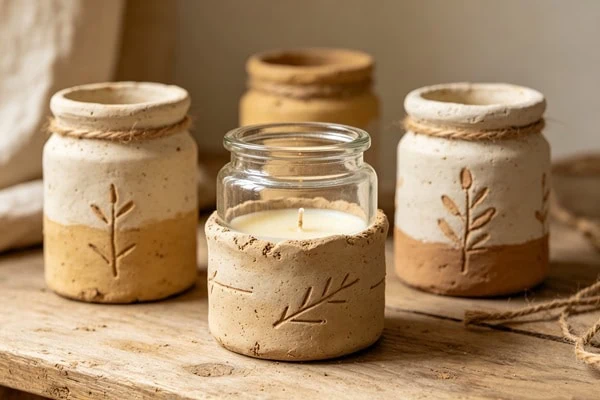
The whole point of using clay or cement is often to get a natural, rustic, and earth-friendly product. It makes no sense to coat that beautiful finish with a harsh chemical sealer. I always suggest my clients consider the end-to-end sustainability of their products, from the glass we make to the final finish. When we talk about “earth-safe,” we are looking for sealers that are low-impact. Beeswax is a traditional and very natural option. You melt the beeswax and a little mineral oil together and rub it into the dry cement. It creates a beautiful, subtle barrier that is totally non-toxic and natural. It might need to be reapplied over time, but it keeps the finish very raw and natural. Another fantastic option is a milk paint sealer or a casein-based sealer. These are also natural and cure to form a very hard, durable, and matte finish. The key is to check the ingredient list. Avoid anything with xylene, toluene, or strong chemical solvents. I would also recommend looking for brands that specify their products are food-contact safe or children’s toy safe, as this guarantees a very low level of toxins. Remember, even an earth-safe sealer must be fully dry and cured before you light a candle in the jar. This usually means a few days of cure time to ensure maximum safety and finish hardness.
| Sealer Type | Eco-Friendliness | Durability | Finish Look |
|---|---|---|---|
| Beeswax/Mineral Oil | Very High | Fair | Natural, Matte to Low Sheen |
| Water-Based Acrylic | High (Low VOC) | Very High | Clear, Matte or Satin |
| Casein/Milk Paint Sealer | High | Good | Natural, Ultra-Matte |
My insights
You have all the steps, but what is the one secret that guarantees safety and quality? Skipping this small detail can ruin your hard work and be unsafe.
The single most important insight for a safe and successful DIY cement or clay candle jar is to ensure there is absolutely no coating applied to the bottom exterior of the glass jar. Keeping the base bare allows the glass to dissipate heat correctly, minimizing thermal stress and the risk of cracking.
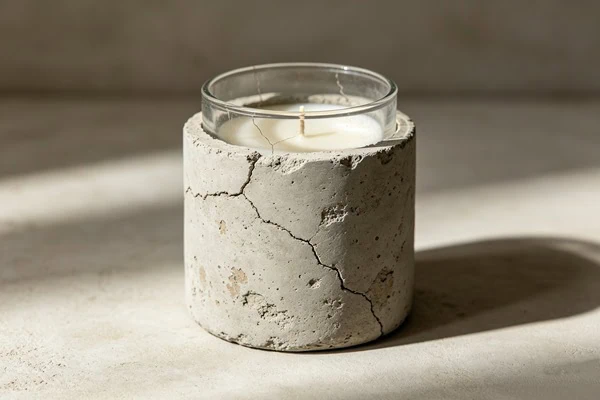
This is the “trick” mentioned in the title, and it comes from years of watching how heat affects glass. Glass is a poor conductor of heat. When a candle burns, the pool of melted wax heats up, and that heat transfers down to the base of the jar. The glass needs a way to let that heat escape into the air. If you cover the entire exterior bottom of the jar with a thick layer of cement, you are effectively putting an insulating blanket on the base. This insulation traps the heat, causing the temperature difference between the inner and outer surface of the glass to become too great. This extreme difference is what causes the glass to crack in a thermal shock failure. When you apply your cement or clay, make sure you stop the coating about 1/4 inch to 1/2 inch above the resting surface of the jar. You need to leave a small “heat-release ring” of bare glass at the bottom. This small gap allows the heat to escape, keeping the thermal stress on the glass within a safe limit. Also, always use a cotton wick with a wick clip at the bottom, and make sure the wick is centered. This keeps the flame exactly where it should be. Remember, the glass’s ability to handle heat is non-negotiable, and the trick is to help the glass do its job by not smothering the base.
Conclusion
The secret to safe, beautiful DIY cement-finished candle jars is using certified heat-safe glass and leaving a small, uncoated “heat-release ring” at the jar’s base to prevent dangerous heat buildup and cracking.